Concrete Leveling Explained: The Advantages of Polyfoam and Traditional Mudjacking Methods
Unequal concrete surfaces can pose safety risks and lessen residential or commercial property value. Two typical solutions are mudjacking and polyfoam progressing, each with distinct procedures and advantages. Comprehending these methods is crucial for home owners encountering concrete concerns. The choice between them can depend on various variables, including budget and ecological problems. Checking out these options exposes vital understandings right into efficient concrete restoration. What might be the ideal fit for your certain demands?
Understanding Irregular Concrete Surfaces
Irregular surface areas can result in water merging, which intensifies wear and tear on the concrete. This situation can add to more damage, requiring extra considerable repair services with time. Home owners and residential property supervisors usually find that addressing these issues immediately is crucial for maintaining security and appearances.
Comprehending the causes and ramifications of unequal concrete is the first action in determining efficient remedies. Without treatment, these surfaces may remain to degrade, making it crucial to acknowledge the relevance of timely repair and maintenance techniques.

What Is Mudjacking?
Mudjacking, likewise called slabjacking, is a practical remedy intended at restoring the stability of sunken concrete surfaces (mudjacking vs polyjacking). This approach involves lifting and stabilizing concrete pieces that have settled because of soil erosion or compaction. By infusing a blend, usually containing cement, water, and various other ingredients, below the concrete, mudjacking raises the piece back to its original setting
This technique is usually favored for its cost-effectiveness and efficiency compared to finish piece substitute. It can be related to numerous concrete frameworks, including driveways, foundations, and walkways. Mudjacking not just addresses aesthetic issues yet additionally improves security by removing trip threats and potential structural concerns. In addition, it can extend the life expectancy of the concrete by protecting against additional wear and tear. As a tried and true technique, mudjacking remains to be a popular selection amongst specialists and property owners looking for dependable concrete repair services.
The Process of Mudjacking
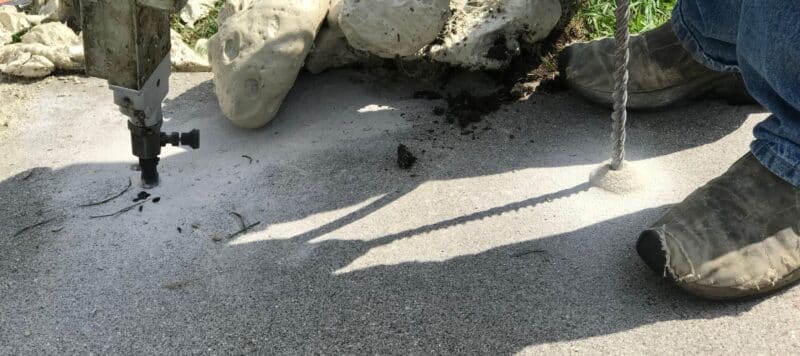
A detailed understanding of the mudjacking process is vital for reliable concrete repair. This method includes increasing sunken concrete pieces by injecting a slurry blend underneath them. The procedure begins with drilling tiny holes into the influenced concrete surface area, usually spaced about three feet apart. These openings work as entry points for the injection of the slurry, which normally includes a mix of dirt, concrete, and water or various other accumulations.
When the holes are pierced, a specialized pump infuses the slurry right into deep spaces under the piece. As the mixture expands, it loads gaps and lifts the concrete back to its original placement. Careful tracking is important during this stage to assure an even prevent and lift damage. After the desired altitude is accomplished, the openings are sealed, and the surface area is allowed to treat. This technique is typically preferred for its performance and minimal disturbance to surrounding locations.
Advantages of Mudjacking
Mudjacking presents several advantages that make it a preferred choice for concrete leveling - mudjacking vs polyjacking. It provides an affordable option contrasted to other techniques, while likewise guaranteeing a fast setup process that lessens disturbance. In addition, mudjacking is taken into consideration an eco-friendly alternative, making use of materials that minimize waste and promote sustainability
Cost-efficient Service
A significantly popular choice for concrete progressing, mudjacking uses a cost-efficient service for home owners encountering irregular surfaces. This method includes infusing a combination of water, soil, and cement under the concrete piece, elevating it back to its initial position at a portion of the cost of replacing the entire piece. Compared to various other leveling techniques, mudjacking generally calls for less materials and less labor, resulting in reduced general expenditures. Additionally, it can resolve a series of problems, such as settling, splitting, and water drainage problems, without the requirement for extensive fixings. House owners value that mudjacking not just saves money yet also lengthens the life of existing concrete structures, making it a functional selection for maintaining residential property value.
Quick Setup Process
Home owners looking for a swift remedy to irregular concrete surfaces frequently turn to mudjacking for its quick setup procedure. This approach involves injecting a blend of water, soil, and cement below the concrete piece, permitting prompt training and stabilization. The entire treatment generally takes just a few hours, reducing disturbance to daily activities. Once the mud is injected, it quickly sets and expands, offering a solid structure without the extensive curing times linked complete information with other techniques. In addition, mudjacking requires very little tools and less labor, even more quickening the installation process. Therefore, house owners can delight in brought back surfaces with very little downtime, making mudjacking an appealing selection for those looking for rapid repair services.
Eco-friendly Alternative
While many concrete leveling methods can be resource-intensive, mudjacking attracts attention as an eco-friendly choice. This method largely utilizes a cement-based slurry, which can frequently be sourced in your area, decreasing transport discharges. Additionally, since mudjacking involves infusing a mixture under existing concrete, it lessens the requirement for substantial excavation, protecting bordering vegetation and dirt integrity. The products used in mudjacking are generally safe and do not launch hazardous chemicals right into the atmosphere. The procedure itself produces very little waste, often recycling existing concrete rather than disposing of it. As an outcome, mudjacking not only successfully addresses uneven surface areas however likewise lines up with sustainable practices, making it a liable option for homeowner concerned about ecological impact.
What Is Polyfoam Leveling?
Polyfoam progressing, a contemporary strategy to concrete lifting, uses an unique increasing foam product to raise irregular or sunken surfaces. This technique involves injecting a light-weight polyurethane foam underneath the concrete piece. Once infused, the foam broadens to fill voids and gaps, supplying a secure base and successfully raising the concrete back to its initial level. The process is relatively fast, commonly permitting instant usage of the surface after application, reducing interruption to the surrounding area.
Polyfoam progressing is known for its performance and effectiveness, making it a preferred selection among professionals. The foam material is resistant to dampness and environmental factors, which adds to its durability. Furthermore, the light-weight nature of the foam lowers the danger of future settling compared to standard methods. As an outcome, polyfoam progressing emerges as a feasible option for different applications, consisting of industrial and domestic concrete fixings.
The Advantages of Polyfoam Leveling
Polyfoam progressing uses a number of distinct advantages for concrete repair. Its long lasting and light-weight nature, incorporated with a fast setup procedure, makes it an efficient option for several tasks. In addition, its moisture-resistant buildings add to lasting outcomes, enhancing general effectiveness.
Sturdy and light-weight
Concrete progressing using polyfoam provides considerable benefits because of its long lasting and lightweight nature. Unlike standard mudjacking, which counts on much heavier products, polyfoam keeps a low weight, lowering the threat of additional settling or damage to the underlying soil. This light-weight characteristic enables for easier handling and application, making it a favorable selection for numerous jobs.
Additionally, polyfoam is resistant to water absorption and does not break down gradually, making sure long-lasting security for concrete surface areas. Its toughness helps to maintain the structural integrity of the leveled area, also in altering climate condition. In general, the mix of light-weight buildings and robust efficiency makes polyfoam a perfect remedy for reliable concrete leveling, offering both long-term and immediate benefits.
Quick Installation Process
One of the standout functions of using polyfoam for concrete leveling is the fast installation procedure it enables. Unlike traditional mudjacking, which can call for comprehensive prep work and drying out time, polyfoam can be applied swiftly. The installment generally entails exploration small holes into the concrete and infusing the foam, which expands quickly to lift the piece. This technique commonly enables for completion within a few hours, decreasing disturbance to everyday activities. In addition, the lightweight nature of polyfoam implies that much less material is required, further enhancing the procedure. Home owners can return to typical use of their surface areas almost instantly after the application, making polyfoam an effective selection for concrete leveling projects. On the whole, the quick setup is a substantial benefit over typical methods.
Moisture Resistant Features
Moisture resistance stands apart as an essential advantage of polyfoam progressing in concrete repair. Unlike conventional mudjacking, which uses a cement-based slurry that is susceptible to water absorption, polyfoam is made to drive away wetness. This particular helps prevent problems such as erosion, mold and mildew development, and further settling of the concrete. The closed-cell framework of polyfoam guarantees that it stays efficient and steady also in wet environments (mudjacking vs polyjacking). In addition, polyfoam's lightweight nature minimizes the danger of extra pressure on the existing concrete piece. This moisture-resistant residential or commercial property enhances the long life of the fixing, making polyfoam an attractive choice for home owners and contractors looking for reputable, long lasting options for sunken or irregular concrete surface areas. Overall, polyfoam progressing uses a more resilient strategy to concrete repair work
Choosing the Right Method for Your Needs
When identifying one of the most suitable approach for concrete leveling, numerous variables enter into play. The particular problem of the concrete, the underlying root cause of the settling, and the wanted result has to all be thought about. Polyfoam injection is usually liked for its quick application and very little disturbance, making it ideal for suburbs. It additionally offers exceptional moisture-resistant properties, which can be valuable in wetter environments. Alternatively, standard mudjacking may be better for larger business projects or when handling considerable gaps under the slab, as it uses a more robust option. Budget plan restraints can also influence the decision, as mudjacking typically costs less than polyfoam approaches. Eventually, speaking with a specialist can supply valuable insights, making sure that the chosen technique straightens with the certain needs and circumstances of the project, bring about effective and lasting cause concrete progressing.
Regularly Asked Inquiries
The Length Of Time Does Mudjacking Typically Last Prior To Needing Fixings?
Mudjacking normally lasts in between 5 to one decade prior to fixings are required. Variables such as dirt problems, climate, and the quality of the preliminary installment can affect the long life of the mudjacking process.
Is Polyfoam Progressing Suitable for All Kinds Of Concrete Surfaces?
Polyfoam progressing is normally appropriate for various concrete surface areas, consisting of driveways and pathways. Its efficiency might differ depending on architectural requirements and details conditions, making assessment by a specialist crucial previous to application.
Can I Do Concrete Progressing Myself, or Should I Employ an Expert?
While some people might attempt concrete leveling themselves, working with a specialist is usually a good idea. Their experience assurances correct techniques and equipment are used, decreasing the risk of mistakes and possible long-lasting problems associated with inappropriate progressing.
What Are the Ecological Influences of Mudjacking and Polyfoam Approaches?
Mudjacking normally includes cement and water, which can add to carbon discharges. In comparison, polyfoam methods typically make use of lighter materials that may minimize environmental impact, yet they additionally increase concerns regarding chemical leaching and long-lasting sustainability.
How Do Climate Condition Affect the Concrete Progressing Process?
Climate condition substantially influence the concrete leveling process. Severe temperature levels can influence product setting times, while moisture levels may impact curing. In addition, rainfall or snow can hinder devices ease of access and extend project timelines.